
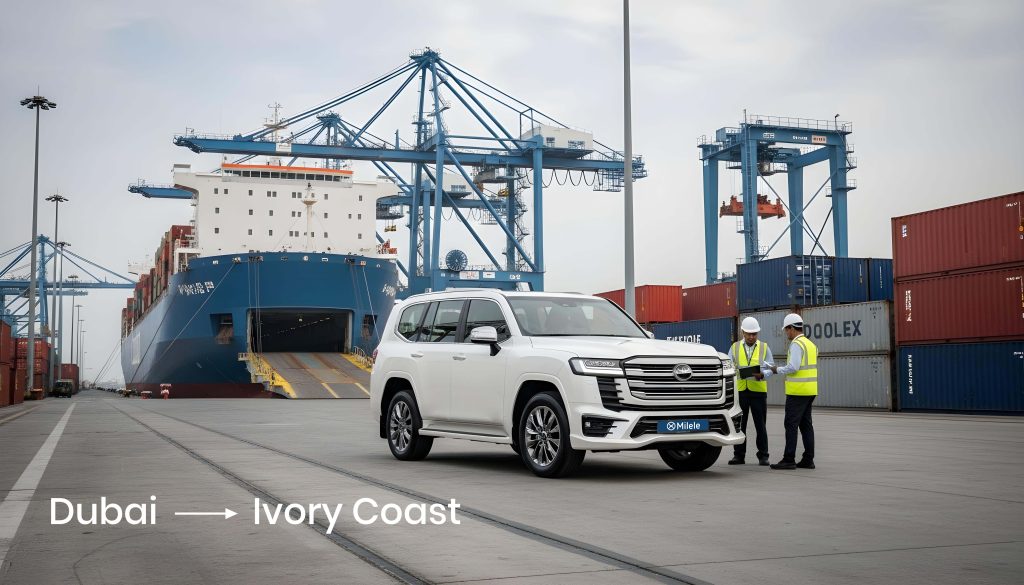
Dubai exports over 4 million vehicles annually, serving markets across Africa, Asia, and Eastern Europe. According to UAE trade data, the automotive export sector contributes billions of dollars to the country’s non-oil economy. The reason is simple, Dubai offers wide model availability, competitive pricing, strict vehicle inspection standards, and one of the most efficient port infrastructures in the world, led by Jebel Ali Port which is ranked among the top 10 global ports by volume.
Step 1: Vehicle Selection and Purchase
The import process begins with selecting the right vehicle. Popular models imported into Ivory Coast include SUVs, pickups, and reliable sedans, especially high-demand vehicles like the Toyota Land Cruiser LC300, which is favored for its durability and resale value.
Professional exporters like Milele assist buyers in sourcing vehicles that match market demand, budget, and compliance requirements, ensuring transparency from the start.
Step 2: Export Documentation and Compliance
Documentation is the backbone of a successful car import. Exporting from Dubai requires an export certificate, commercial invoice, bill of landing, and certificate of origin. Any missing or incorrect paperwork can delay shipments or increase costs at destination.
Milele streamlines this phase by managing compliance directly, minimizing risk and avoiding unnecessary port delays.
Step 3: Shipping from Dubai to Ivory Coast
Cars are typically shipped from Jebel Ali Port to Abidjan Port, with transit times averaging 33–40 days, depending on vessel schedules. Importers can choose between Ro-Ro (Roll-on/Roll-off) shipping used for cost efficiency or container shipping, which offers added protection for premium vehicles. Industry shipping data shows that Ro-Ro accounts for nearly 70% of vehicle exports to West Africa due to its reliability and lower cost.
Step 4: Customs Clearance in Abidjan
Once the vehicle arrives in Ivory Coast, customs clearance begins. Duties and taxes are calculated based on vehicle value, engine size, and age. Working with licensed customs agents is critical, as improper valuation can result in penalties. Vehicles newer than five years generally benefit from smoother clearance and lower charges, making Dubai-sourced cars highly attractive to Ivorian buyers.
Why the Right Export Partner Matters
Statistics show that over 30% of vehicle import delays in West Africa are caused by documentation errors or poor logistics coordination. This is where experienced exporters like Milele make a real difference. By handling sourcing, documentation, shipping coordination, and post-arrival support, Milele ensures vehicles arrive on time, compliant, and in excellent condition,helping dealers focus on sales rather than logistics.
Conclusion
Importing a car from Dubai to Ivory Coast is a powerful opportunity—but only when managed correctly. With Dubai’s world-class export ecosystem and trusted partners like Milele, dealers and buyers gain access to quality vehicles, smooth processes, and dependable results. In a market where trust drives business, choosing the right export partner isn’t optional, it’s essential.